In 2026, as the United States marks its Semiquincentennial—250 years since the signing of the Declaration of Independence in 1776—it is vital to remember that the story of Black freedom does not begin or end at the borders of the United States. In 1776, millions of African descendants across the Americas were held in chains.
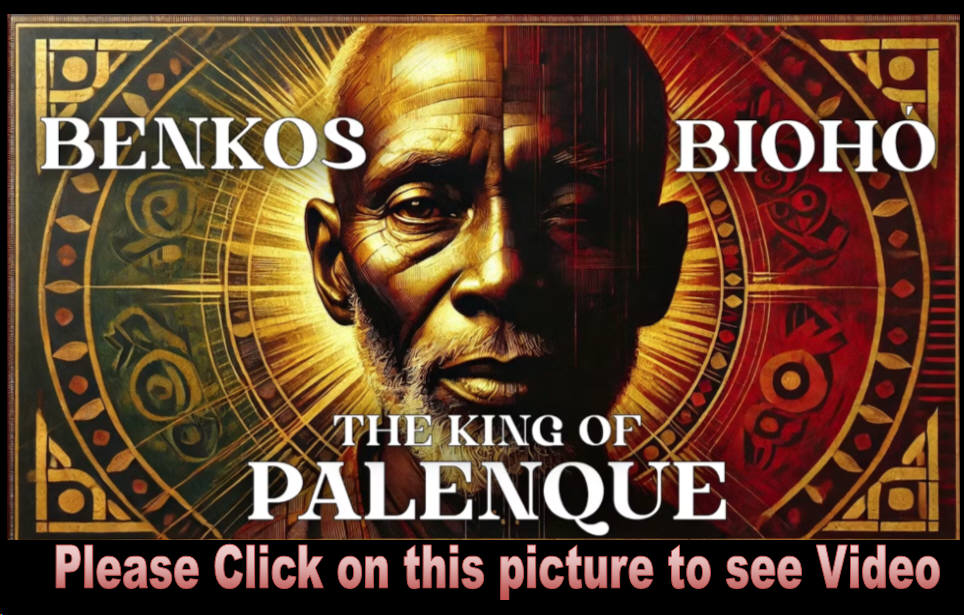
The **"Black Freedom 250th"** serves as the official, independent Black celebration of this historic milestone. We honor the global timeline of resistance, and at the absolute foundation of that timeline stands **Benkos Biohó**, an African king who successfully conquered slavery more than 170 years *before* the American Revolution.
From Royalty to Chains
Long before he was captured, Benkos Biohó was born into a royal family in West Africa, descending from the Mandinka kingdom in the region of present-day Guinea-Bissau. He was a leader, a warrior, and a man of immense stature among his people.
In the late 1500s, Portuguese slave traders kidnapped Biohó, stripping him of his homeland. He was packed into the belly of a slave ship and trafficked across the Atlantic Ocean, arriving at the brutal port city of Cartagena, Colombia—then the central capital of the Spanish Empire's slave trade in South America. The Spanish renamed him "Domingo," attempting to erase his African identity, and sold him into forced labor.
The Fire of Rebellion
They could chain his body, but they could not enslave his mind. Biohó made his first bid for freedom when a boat transporting him down the Magdalena River sank. He escaped into the wilderness but was eventually recaptured.
Undeterred, in **1599**, Biohó organized a meticulous, strategic escape. Alongside his wife, Wiwa, and a brave group of about thirty enslaved men and women, he broke his chains and fled deep into the swampy jungles and rocky terrain of the *Montes de María*, located southeast of Cartagena.
In these mountains, Biohó built a heavily fortified, walled maroon settlement known as a *palenque*. This community would become known as **San Basilio de Palenque**.
The King of the Maroons and His Intelligence Network
Biohó was not content with just securing his own freedom. He was an elite military strategist. He organized a highly disciplined guerrilla army and established a brilliant espionage and intelligence network that reached directly back into the slave quarters of Cartagena.
* **The Raids:** Biohó and his soldiers regularly raided Spanish plantations and ships, defeating the Spanish colonial forces and liberating newly arrived Africans.
* **The Maps in the Hair:** Under Biohó’s leadership, the women of the palenque developed a revolutionary system of resistance. They would braid maps into their hair—using tight twists and cornrows to chart the exact paths, rivers, and escape routes through the mountains so that escaping Africans could find their way to the free town without getting lost.
Forcing an Empire to its Knees
For years, the Spanish Governor sent heavily armed military expeditions into the mountains to crush the rebellion and destroy the palenque. Every single time, Biohó’s guerrilla forces out-maneuvered and defeated the Spanish army.
By **1605**, completely humiliated and unable to defeat the Black fighters, Governor Gerónimo de Suazo y Casasola did something unprecedented: **he offered King Benkos Biohó a peace treaty.**
The Spanish Empire was forced to recognize the total autonomy and freedom of the Palenque. Under the treaty, Biohó was granted the right to walk into the walled city of Cartagena completely armed, dressed in fine Spanish silks, and treated with the respect of a sovereign foreign leader.
The Betrayal and the Living Legacy
For years, the peace held. However, a new Spanish Governor, García Girón, took power and grew deeply terrified of Biohó’s immense influence and the deep respect he commanded among the entire Black population.
In **1619**, violating the sacred peace treaty, Spanish authorities ambushed and captured an unsuspecting Biohó on the outskirts of the city. He was imprisoned for two years, and on **March 16, 1621**, he was publicly executed by hanging and quartering in Cartagena. The Governor wrote that he ordered the execution because Biohó was *"too dangerous because of the extent to which he was respected."*
The Spanish thought that by killing the man, they could kill the revolution. They were wrong. Biohó became an immortal martyr. His people continued the war for another seventy years until **1691**, when the King of Spain issued an official Royal Decree declaring San Basilio de Palenque permanently free—making it the **first free Black town in the Americas**, nearly a century before 1776.
The UNESCO Masterpiece
Because the descendants of Benkos Biohó successfully defended their independence, they preserved their pure African roots, ancestral burial rituals (*lumbalú*), unique cuisine, and developed *Palenquero*—the only Spanish-based Creole language in the world. In **2005**, UNESCO officially declared San Basilio de Palenque a *Masterpiece of the Oral and Intangible Heritage of Humanity*.
Biohó’s legacy offers African Americans a powerful and necessary way to celebrate America’s 250th anniversary through a lens of truth, dignity, and freedom. While the United States declared independence in 1776, Black people were still enslaved, excluded from the promises of liberty and democracy. Biohó, however, represents a different timeline — a Black freedom story that predates the nation itself. As the founder of San Basilio de Palenque, in present day Colombia the first free Black town in the Americas.
Bioho embodies the courage, resistance, and self‑determination that define the global African struggle for liberation. Black Freedom 250th builds on this legacy by giving African Americans a meaningful way to participate in the Semiquincentennial through Education, Diversity, and Democracy. It reframes the 250th not as a celebration of a freedom we did not yet have, but as an opportunity to honor the long, unfinished journey toward justice. By embracing Biohó’s story alongside America’s 250th, Black Americans can celebrate a heritage of resilience, connect with Afro‑diasporic history, and assert that our freedom narrative is essential to the nation’s identity. Black Freedom 250th ensures that as America marks 250 years, the world also recognizes the centuries‑old Black fight for liberation that made modern democracy possible.
